The difference between logistics and freight forwarding is often unclear, especially for businesses involved in shipping or supply chain operations. Both deal with moving goods, which leads many companies to treat them as the same service. In practice, they serve very different roles.
Choosing the wrong one can result in higher costs, poor coordination, or gaps in your supply chain. This guide clearly explains how logistics and freight forwarding differ, what each service covers, and how to decide which one your business actually needs based on how and where you move goods.
Businesses shipping internationally often rely on freight forwarding services in Dubai to manage transport coordination, documentation, and customs clearance efficiently.
Logistics vs Freight Forwarding – The Core Difference
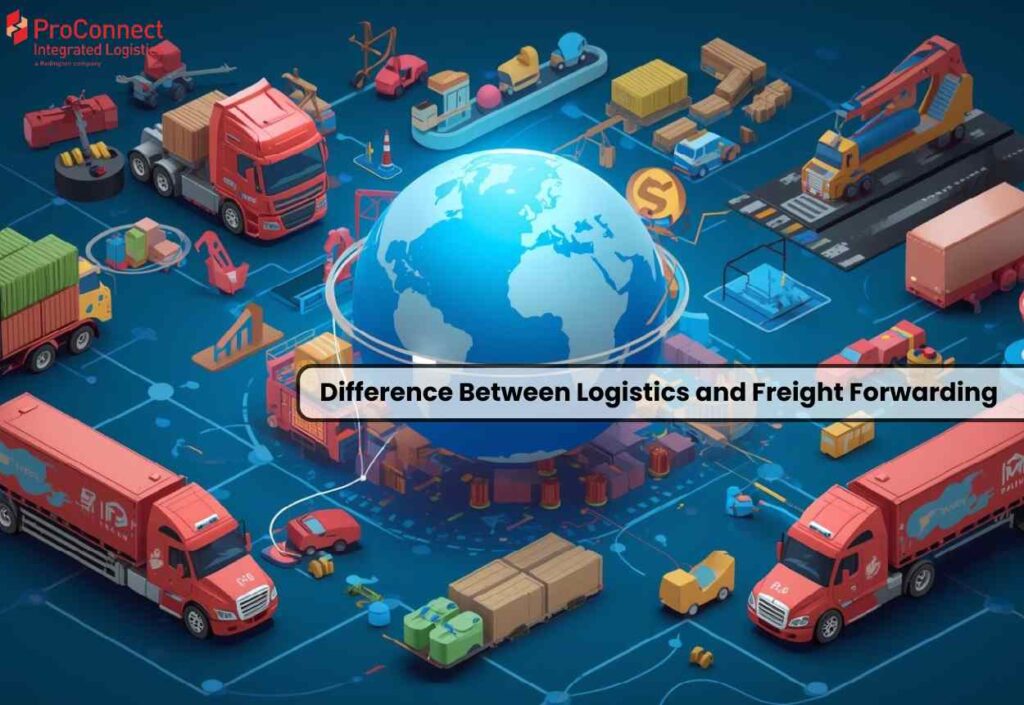
The difference between logistics and freight forwarding comes down to how much of the supply chain is managed. Logistics covers the broader, ongoing movement and storage of goods, including inventory control, warehousing, and distribution. It supports daily operations across a business.
Freight forwarding focuses on individual shipments, particularly international movements. It coordinates transport, documentation, and customs clearance to move goods from origin to destination efficiently. In practice, freight forwarding operates within the wider logistics framework rather than replacing it.
What Does Logistics Actually Cover?
Logistics covers the ongoing management of goods once they enter a supply chain. It focuses on how products are stored, handled, moved internally, and delivered to customers on a continuous basis. This is especially important for businesses that deal with regular orders, inventory levels, and distribution planning.
Core logistics activities typically include warehousing and storage, inventory management, and order fulfilment. It also involves distribution planning and last-mile delivery, ensuring goods reach the right location at the right time. For many businesses, logistics also includes reverse logistics, such as returns, replacements, or re-distribution of stock.
Read Also- How to Choose the Right Freight Forwarding Company in Jebel Ali Free Zone
What Does Freight Forwarding Focus On?
Freight forwarding focuses on moving goods from one location to another, most often across international borders. It is concerned with executing a shipment correctly rather than managing ongoing supply chain operations. Each shipment is handled as a separate movement with its own route, documents, and compliance requirements.
For companies importing or exporting goods through the UAE, professional international freight forwarding support ensures shipments move smoothly across borders while meeting carrier and customs requirements.
Key freight forwarding activities include international transport planning, carrier selection and booking, and route optimisation based on cost, transit time, and reliability. Freight forwarders also manage export and import customs clearance, ensuring documents such as commercial invoices, packing lists, and transport documents are accurate and compliant. Coordinating with carriers, ports, airlines, and customs authorities is a core part of this role.
Logistics vs Freight Forwarding – Side-by-Side Comparison
Understanding the difference between logistics and freight forwarding becomes easier when you compare their roles directly. While both support the movement of goods, they operate at different levels of the supply chain.
| Aspect | Logistics | Freight Forwarding |
|---|---|---|
| Scope | Manages the full supply chain flow | Manages the movement of a shipment |
| Duration | Ongoing, day-to-day operations | Per shipment or project |
| Core focus | Storage, inventory, fulfilment, distribution | Transport, customs, documentation |
| Asset use | Often involves warehouses and delivery networks | Uses carrier and transport networks |
| Best suited for | Businesses managing stock and regular orders | Businesses shipping goods domestically or internationally |
In simple terms, logistics supports how goods are stored and distributed over time, while freight forwarding focuses on how goods are transported from one place to another. This comparison helps clarify which service aligns better with your operational needs.
Read Also- How Does Freight Forwarding Work
Can Logistics and Freight Forwarding Work Together?
Yes. Logistics and freight forwarding often work together as part of a single supply chain flow. In many cases, a freight forwarder manages the international transportation and customs clearance, while a logistics provider handles storage, inventory, and local distribution once the goods arrive.
This combination is common for businesses importing goods into the UAE. Freight forwarding covers the movement from the origin country to ports or airports, while logistics takes over for warehousing and last-mile delivery. When these services are managed separately, handovers can create delays or miscommunication.
Which One Do You Need for Your Business?
If your business mainly ships goods across borders and deals with customs or carrier coordination, freight forwarding is the right choice. It supports importers and exporters that manage shipments on a per-movement basis.
If your business stores products, manages inventory, and delivers orders regularly, logistics is a better fit. It focuses on ongoing operations like warehousing, fulfilment, and distribution.
Many growing businesses need both. In this case, freight forwarding manages international transport, while logistics handles storage and local delivery at destination.
How ProConnect Helps Businesses with Logistics and Freight Forwarding in the UAE
Managing logistics and freight forwarding in the UAE often requires handling international shipments, customs procedures, free zones, and local delivery under one workflow. This is where ProConnect supports businesses with integrated solutions.
ProConnect provides both freight forwarding and logistics services, allowing businesses to manage international transport, customs clearance, warehousing, and local distribution through a single partner. Our teams work closely with UAE ports, airports, and customs authorities to ensure shipments move smoothly from arrival to final delivery. This integrated approach reduces handovers, improves visibility, and helps businesses operate more efficiently across the supply chain.
FAQs For Difference between logistics and freight forwarding
-
Do I need both logistics and freight forwarding?
Many businesses do. Freight forwarding handles international shipping and customs, while logistics manages storage, inventory, and local distribution after the goods arrive.
-
Is logistics only for large companies?
No. Logistics services are used by businesses of all sizes, including SMEs and e-commerce companies that need warehousing, fulfilment, or delivery support.
-
Can one company provide both services?
Yes. Some providers offer integrated logistics and freight forwarding, allowing businesses to manage shipping, customs, storage, and delivery through a single partner.


 APP DOWNLOAD