The difference between shipping line and freight forwarder is a common source of confusion for businesses involved in international trade. Both are essential to moving cargo across borders, and both are involved in ocean freight, which makes their roles easy to mix up.
However, they do very different jobs within the shipping process. Misunderstanding who does what can lead to gaps in responsibility, delays, or incorrect expectations during a shipment. This guide clearly breaks down the roles of shipping lines and freight forwarders, explains where their responsibilities begin and end, and helps you decide which one you need based on how your cargo is being moved.
Shipping Line vs Freight Forwarder – The Core Difference
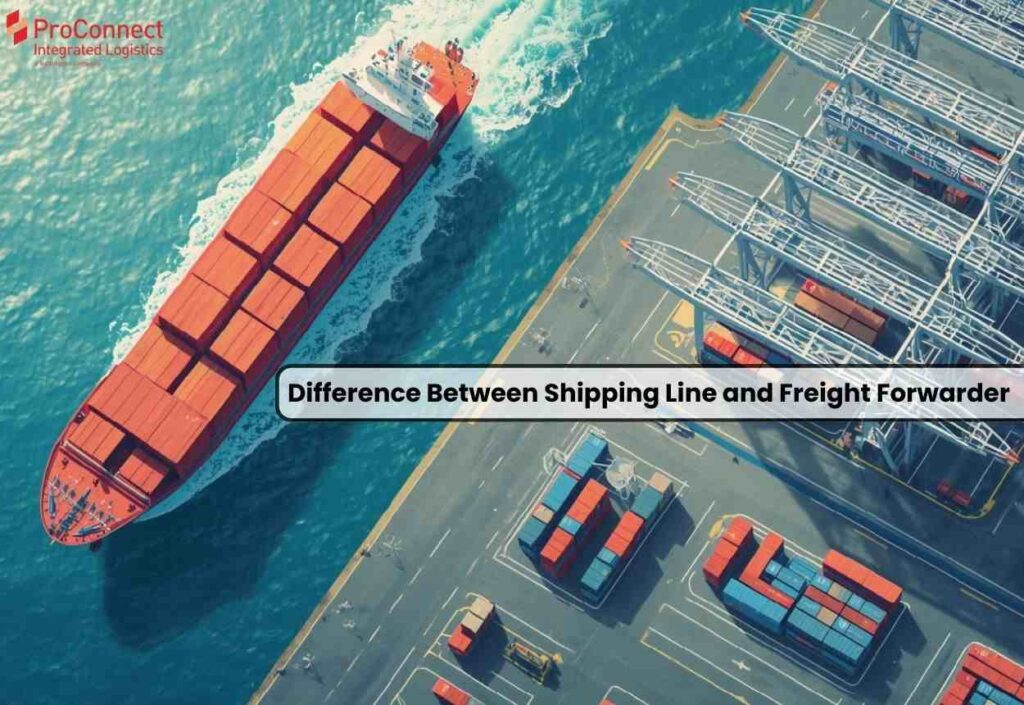
The core difference between a shipping line and a freight forwarder lies in responsibility and scope. A shipping line is a carrier. Its role is to transport cargo by sea between ports using its vessels and schedules. Once cargo is loaded onboard, the shipping line controls the sea leg of the journey.
A freight forwarder, by contrast, manages the shipment. Instead of operating vessels, the forwarder coordinates all stages of movement, including carrier selection, documentation, customs clearance, and delivery beyond the port. Freight forwarders work with shipping lines as part of this process, rather than replacing them.
For businesses shipping through the UAE, professional freight forwarder in Dubai help manage carriers, documentation, customs clearance, and inland delivery under one coordinated process.
Read Also- Difference Between Logistics and Freight Forwarding
What Does a Shipping Line Actually Do?
A shipping line’s role is centred on ocean transportation between ports. Shipping lines own or operate vessels and are responsible for carrying cargo across sea routes according to fixed schedules and capacities. Once cargo is loaded onboard, the shipping line manages the vessel operation, including sailing, handling at sea, and arrival at the destination port.
Shipping lines also issue the Bill of Lading, which serves as a transport contract and receipt for the cargo. During the sea leg of the journey, the shipping line holds responsibility for the cargo under international maritime rules, subject to the terms of carriage.
What Does a Freight Forwarder Actually Do?
A freight forwarder manages the end-to-end movement of a shipment, coordinating all activities required to move cargo from origin to destination. Rather than transporting goods themselves, freight forwarders plan how the shipment moves, select the most suitable carriers, and manage the operational details that sit around the transport leg.
Key responsibilities include shipment planning, carrier selection (including booking space with shipping lines), and route optimisation based on cost, transit time, and reliability. Freight forwarders also handle export and import customs clearance, ensuring documentation such as commercial invoices, packing lists, and transport documents is accurate and compliant with regulations.
Shipping Line vs Freight Forwarder
The difference between a shipping line and a freight forwarder becomes much clearer when you compare their responsibilities side by side. While both are involved in international shipping, they operate at different levels of the process and are accountable for different parts of a shipment.
| Aspect | Shipping Line | Freight Forwarder |
|---|---|---|
| Primary role | Transports cargo by sea | Coordinates the entire shipment |
| Scope of service | Port-to-port ocean transport | Door-to-door or port-to-door |
| Asset ownership | Owns or operates vessels | Uses carrier networks |
| Customs clearance | Not handled | Managed by the forwarder |
| Transport modes | Sea only | Sea, air, and road |
| Customer interface | Limited to sea carriage | Single point of contact |
| Responsibility focus | Cargo while at sea | Shipment from origin to destination |
| Best suited for | Simple port-to-port moves | Complex or international shipments |
In practical terms, shipping lines focus on moving cargo across the ocean, while freight forwarders focus on making the shipment work end to end. This distinction helps businesses decide whether they need a carrier for a specific sea leg or a partner to manage the full shipping process.
When Should You Work Directly With a Shipping Line?
Working directly with a shipping line makes sense when your shipping needs are simple and clearly defined. This is often the case for large-volume shippers that move full container loads between the same ports on a regular basis and already have internal teams managing documentation and inland transport.
Businesses with established logistics operations may choose to book directly with a shipping line for port-to-port ocean freight, especially when customs clearance, trucking, and delivery are handled separately.
When Is a Freight Forwarder the Better Choice?
This is where working with a reliable freight forwarder in UAE becomes essential, especially when shipments require coordination across sea, road, and air transport.
A freight forwarder is the better choice when shipments involve multiple steps, borders, or regulatory requirements. This is common for businesses engaged in international trade that need support beyond basic port-to-port transport.
Freight forwarders are especially valuable for customs-heavy cargo, multi-country routes, or shipments that require coordination across sea, road, and air transport. They are also well-suited for SMEs and growing businesses that do not have in-house teams to manage documentation, carrier coordination, and compliance.
ProConnect Role in Managing Shipping Lines and Freight Forwarding in the UAE
Managing ocean shipments through the UAE often involves coordinating shipping lines, customs authorities, ports, and inland transport providers at the same time. This is where ProConnect supports businesses with a structured, end-to-end approach.
ProConnect acts as the coordination point between shipping lines and all other parties involved in a shipment. This includes carrier selection, documentation management, customs clearance, and inland transport from UAE ports to final delivery locations. Our teams are familiar with local port operations, free zone procedures, and regulatory requirements, helping shipments move smoothly without unnecessary handovers.


 APP DOWNLOAD