Freight forwarding involves more than booking transport. A single shipment can pass through multiple hands, documents, and checkpoints before it reaches its destination. This is where confusion often starts. Many businesses know they need a freight forwarder, but are unclear about what happens at each stage of the process.
This guide explains how freight forwarding works step by step, using a practical, real-world flow. It is written for importers, exporters, and supply chain teams who want clarity, not theory. By the end, you will understand how a shipment is planned, moved, cleared through customs, and delivered, and what information matters at each stage.
Overview of the Freight Forwarding Process
Freight forwarding follows a structured operational flow designed to move cargo efficiently from origin to destination. While shipment details may change, the core stages remain consistent.
The process starts with planning, where shipment requirements are reviewed and the best transport option is selected. This is followed by booking, where carriers are confirmed and schedules are locked in. Once cargo is collected, it moves into transportation, supported by tracking and documentation. The shipment then passes through customs clearance, first at export and later at import. The final stage is delivery, where goods reach the consignee.
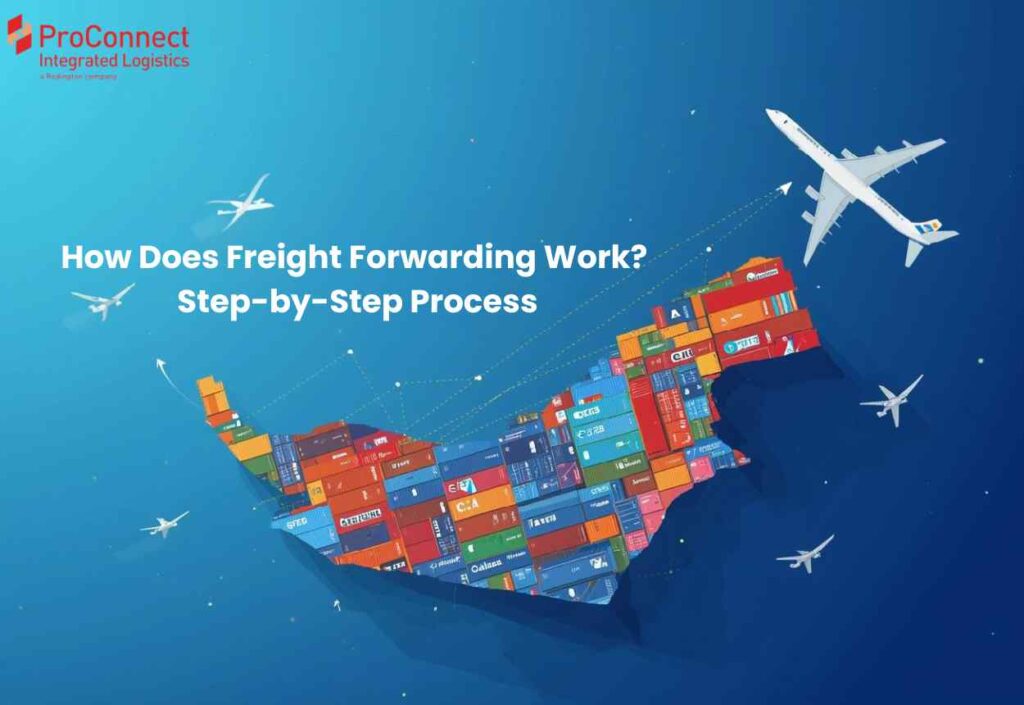
How Does Freight Forwarding Work? Step-by-Step
Freight forwarding works as a sequence of coordinated actions rather than a single service. Each step builds on the previous one, and missing or incorrect information early in the process often leads to delays later. The breakdown below explains how a typical shipment moves from planning to final delivery, highlighting what happens at each stage and what businesses need to prepare.
Step 1 – Shipment Planning & Requirements Assessment
Every freight forwarding process begins with planning. At this stage, shipment details are reviewed to determine the most suitable transport solution.
Key factors assessed include the type of cargo, its size and weight, and whether it requires special handling such as temperature control or hazardous classification. The origin and destination are reviewed to identify routing options and regulatory requirements. Timelines, budget constraints, and risk factors are also considered before selecting the transport mode, whether air, sea, or road.
Clear planning at this stage sets the foundation for accurate pricing, smooth customs clearance, and on-time delivery.
Step 2 – Route Planning, Quotation & Carrier Selection
Once the shipment requirements are clear, the freight forwarder plans the most efficient route and prepares a quotation. This involves comparing available carriers, transit times, and cost options based on the selected transport mode. Routes may vary depending on port congestion, airline schedules, or regional regulations.
At this stage, Incoterms are reviewed to confirm cost and responsibility boundaries between the shipper and consignee. The forwarder then issues a detailed quote covering freight charges, surcharges, and expected timelines. After approval, space is booked with the chosen carrier, and the shipment schedule is confirmed.
Step 3 – Cargo Pickup, Packaging & Export Preparation
After booking is confirmed, the freight forwarder arranges cargo pickup from the supplier, factory, or warehouse. This can involve trucks, containers, or consolidation at a freight station, depending on shipment size and mode.
Proper packaging and labelling are critical at this stage. Cargo must be packed to withstand handling and transit, while labels ensure correct identification and compliance with carrier and customs requirements. At the same time, export documents are prepared, including the commercial invoice and packing list. Any permits or special approvals are also checked before the shipment moves forward.
Step 4 – Export Customs Clearance
Before cargo can leave the country of origin, it must pass through export customs clearance. This step ensures the shipment complies with local trade regulations and is approved for international movement.
The freight forwarder submits required documents such as the commercial invoice, packing list, and export declaration, along with the correct HS codes. For certain goods, additional export permits or regulatory approvals may be required. Customs authorities review the information and may conduct inspections if needed. Once cleared, the shipment is authorised to depart.
Step 5 – International Transportation & Shipment Tracking
Once export clearance is completed, the shipment enters the main transportation phase. Cargo moves by air, sea, or road, depending on the agreed route and service level. During transit, the freight forwarder monitors key milestones such as departure, transhipment, and arrival.
Shipment tracking plays a critical role at this stage. Forwarders provide status updates and manage exceptions like schedule changes, port congestion, or weather-related delays. If disruptions occur, alternative routing or revised delivery plans may be arranged to minimise impact.
Step 6 – Import Customs Clearance at Destination
After the shipment arrives at the destination country, it must clear import customs before it can be released for delivery. This step confirms that the cargo meets local import regulations and that all duties and taxes are settled.
The freight forwarder submits import documents, including the commercial invoice, packing list, and transport document such as the Bill of Lading or Air Waybill. Customs authorities assess duties and taxes and may select the shipment for inspection. Once all requirements are met and payments are completed, customs releases the cargo.
Step 7 – Final Delivery to Consignee
Once import customs clearance is completed, the shipment is released for final delivery. The freight forwarder arranges transportation from the port or airport to the consignee’s warehouse, distribution centre, or delivery address.
This stage may involve container haulage, deconsolidation at a freight station, or direct door delivery, depending on the shipment type. Upon delivery, the receiver confirms receipt of the goods, often through a Proof of Delivery (POD) document. Any discrepancies or visible damage are noted at this point.
Who Is Involved at Each Stage of Freight Forwarding?
Several parties are involved in a freight forwarding shipment, each playing a specific role at different stages of the process.
- The shipper provides the cargo, commercial documents, and shipment instructions. Their accuracy directly affects pricing, routing, and customs clearance.
- The freight forwarder coordinates the entire process, from booking and documentation to customs clearance and delivery management.
- The carrier is responsible for physically transporting the cargo by air, sea, or road according to the agreed schedule.
- Customs authorities at both origin and destination review documentation, assess duties and taxes, and approve cargo movement.
- The consignee receives the goods at the final destination and confirms delivery.
Common Delays in the Freight Forwarding Process
Delays in freight forwarding often happen due to avoidable issues rather than transport itself. One of the most common causes is incorrect or incomplete documentation, such as missing invoices, packing list errors, or mismatched shipment details. These issues frequently result in customs holds.
Another major factor is incorrect HS code classification, which can trigger inspections, duty reassessments, or penalties. Unrealistic timelines also cause problems, especially when port congestion, customs checks, or weather disruptions are not factored in. Finally, lack of shipment visibility can delay responses when issues arise during transit.
How ProConnect Supports Freight Forwarding in the UAE
Managing freight forwarding in the UAE requires more than general logistics knowledge. Shipments moving through Dubai often involve Jebel Ali Port, major airports, free zones, and strict customs procedures. This is where ProConnect adds practical value for businesses trading in and out of the region.
ProConnect supports clients across UAE from the earliest planning stage. Our team assesses cargo requirements, selects the most efficient routes, and secures carrier options aligned with UAE import and export regulations.
FAQs For How Does Freight Forwarding Work
-
How long does the freight forwarding process take?
The timeline depends on the transport mode, route, and customs requirements. Air freight can take a few days, while sea freight may take several weeks. Delays can also occur due to documentation issues or inspections at origin or destination.
-
Who pays duties and taxes during freight forwarding?
Responsibility for duties and taxes depends on the agreed Incoterms. In some cases, the shipper pays; in others, the consignee is responsible. This is confirmed during the planning and quotation stage.
-
Can freight forwarding handle door-to-door delivery?
Yes. Freight forwarding can be arranged as door-to-door, covering pickup, international transport, customs clearance, and final delivery. This is commonly used for shipments moving in and out of the UAE.


 APP DOWNLOAD