Understanding the difference between logistics and warehousing is essential for any business that manages inventory or customer delivery. The two terms are often mixed because they sit close together in the supply chain, yet they serve different purposes. Warehousing keeps goods stored safely and accurately, while logistics plans and manages how goods move across the network. Storage and transport account for roughly 40 percent of total supply chain costs.
Warehousing is about storing goods safely until they are needed, while logistics focuses on moving those goods to the right place at the right time. This guide breaks down both concepts clearly so you can see how they work independently and how they support each other.
What Is the Difference Between Logistics and Warehousing?
Warehousing focuses on storing and managing goods, and professional warehousing services ensure products are kept secure, organised, and ready for dispatch, while logistics plans and controls how those goods move through the supply chain. They work closely together, but they are not the same. Businesses often confuse them because issues like late deliveries or stock shortages usually occur when storage and transport activities are not aligned.
Many people confuse the two because warehousing is one part of the wider logistics process, but they are not the same. Most supply chains use separate KPIs such as inventory accuracy (typical target above 97 percent) for warehousing and delivery performance (often above 95 percent) for logistics.
What Is Warehousing?
Warehousing is the controlled storage of goods until they are ready to move to the next stage of the supply chain. It ensures products are kept secure, organised, and preserved in suitable conditions so businesses can maintain steady stock availability. Bonded warehouses in Dubai allow deferred duty payments that support re-export operations.
Examples of Warehousing in Real Operations
FMCG example
A beverage manufacturer stores finished drinks in a temperature-controlled warehouse so retailers can replenish shelves quickly during peak demand weeks.
Retail example
A fashion brand holds seasonal stock in a warehouse to ensure every store receives the correct quantity when new collections launch.
What Is Logistics?
Logistics refers to the planning, movement, and coordination of goods across the entire supply chain. It covers everything that happens outside the warehouse walls, ensuring products move from suppliers to warehouses, from warehouses to customers, and through returns when needed.
The goal is to deliver the right product to the right place at the right time at the lowest possible cost. A typical GCC road shipment takes 24 to 72 hours depending on the route.
Logistics in Action (Practical Example)
A supplier ships components to a manufacturer where logistics teams coordinate pickup schedules and carrier allocation.
Once production is complete, logistics moves the finished SKUs to the warehouse for storage and order preparation.
When customers place orders, logistics arranges outbound transport, ensures accurate routing, manages last-mile partners, and delivers the goods on time.
Warehousing vs Logistics: Key Differences
The terms warehousing and logistics are closely connected, yet they serve different purposes within the supply chain. Warehousing focuses on storage, handling, and preparation activities, which are core functions of warehousing within the supply chain.
The table below provides a clear difference between logistics and warehousing across operational scope, responsibilities, skillsets, and technologies. This helps users immediately understand where each function begins and ends.
| Aspect | Warehousing | Logistics |
|---|---|---|
| Scope of operations | Storage, handling, preservation, and order preparation inside a fixed facility | Movement, coordination, and flow of goods across suppliers, warehouses, and customers |
| Primary focus | Keeping inventory safe, organised, and ready for dispatch | Ensuring goods reach the right place at the right time in the most efficient way |
| Time horizon | Medium to long-term stock holding depending on demand cycles | Short-term movement schedules and continuous transport planning |
| Core responsibilities | Receiving, put-away, storage, picking, packing, cycle counting, dispatch preparation | Transportation management, routing, carrier coordination, freight booking, last-mile delivery, returns |
| Operational output | Accurate inventory availability and well-prepared orders | Timely and cost-effective deliveries with minimal disruption |
| Key performance metrics | Inventory accuracy, order picking accuracy, storage utilisation | On-time delivery rate, transit time, freight cost per shipment |
| Team skillsets | Inventory control, material handling, warehouse safety, equipment operation | Route planning, carrier negotiation, documentation, transport optimisation |
| Technology used | Warehouse Management System (WMS), barcode scanners, RFID, automated storage systems | Transport Management System (TMS), GPS tracking, routing tools, freight visibility platforms |
How Warehousing Supports Logistics
Warehousing and logistics function independently, yet the supply chain only works efficiently when both operate in sync. Strong coordination between storage and movement reduces delays, improves accuracy, and strengthens overall performance. Accurate inventory allows optimised route planning. Here is how warehousing directly supports logistics operations.
Inventory Accuracy for Efficient Distribution
A well-managed warehouse ensures stock is counted, updated, and stored in the correct locations. High inventory accuracy allows logistics teams to plan transport confidently, avoid missed dispatches, and ensure trucks leave on time with the right products.
Faster Order Movement Through Coordinated Flows
When warehouse teams align picking, packing, and staging schedules with transport departure times, outbound operations run smoothly. This coordinated flow prevents bottlenecks at loading bays and speeds up overall order throughput.
Reducing Delays Through Integrated Planning
Proactive coordination between warehouse capacity, carrier availability, and order priorities prevents last-minute congestion. Integrated planning ensures that urgent orders are picked first, transport is booked earlier, and goods flow through the supply chain without interruptions.
Logistics and Warehousing in the UAE
The UAE has become one of the most strategic logistics hubs in the world. Its infrastructure, free zone ecosystem, and regional connectivity make it a preferred base for businesses managing inventory and distribution across the Middle East, Africa, and South Asia.
Free Zones, Re-Export Hubs and Trade Links
Locations like JAFZA, DWC, Dubai Industrial City, and Khalifa Industrial Zone offer customs benefits, tax efficiencies, and simplified procedures that support fast re-export operations. These zones are strategically positioned near air and sea gateways, enabling smooth cross-border movement.
How UAE Infrastructure Supports Fast Logistics
The UAE combines world-class ports, high-capacity airports, road networks, and advanced digital systems. This infrastructure shortens transit times, improves reliability, and allows companies to handle high volumes with fewer delays. Jebel Ali Port connects to 150+ shipping lines.
Why Many Companies Store in UAE but Distribute Regionally
Businesses choose the UAE for warehousing because it provides reliability, multi-country access, and flexible customs models. From a single distribution point, companies can serve GCC markets, North Africa, and India with shorter lead times and predictable transport schedules. Average customs clearance in UAE is generally faster compared to regional averages.
Which One Is More Important for a Business?
Neither logistics nor warehousing is inherently more important because each serves a different purpose in the supply chain. Logistics ensures products move efficiently from one point to another, while warehousing ensures those products are available, protected, and ready when needed. For industries with high SKU velocity such as FMCG, logistics responsiveness has greater impact. In long-cycle industries like spare parts, storage reliability is more important.
A fast-moving eCommerce company may rely more on strong logistics for quick deliveries, while a manufacturing or retail brand may depend heavily on warehousing to maintain steady stock levels. In most cases, both functions work together to create a reliable and customer focused supply chain.
Real Examples: When a Business Needs Warehousing vs Logistics
E-commerce Business
A growing e-commerce seller handling two hundred daily orders needs reliable storage, fast picking, and return processing. During sales events, that volume can rise to eight hundred orders a day, making warehouse efficiency more critical than transportation capacity.
Distribution-Heavy FMCG Brand
An FMCG company supplying supermarkets may deliver to one hundred to two hundred outlets several times a week. Since products must reach each store on a fixed schedule, route planning and transport reliability matter more than storage depth.
How ProConnect Supports Logistics and Warehousing Requirements
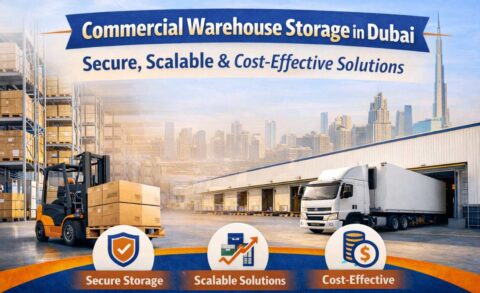
Warehousing Capabilities: ProConnect operates bonded and non-bonded facilities that include temperature-controlled zones and adaptable racking systems as best warehousing services in UAE. These support varied product types and ensure stable storage conditions.
Logistics Capabilities: Its logistics network covers local transport, last-mile distribution, and coordinated cross-border movements across the GCC, supporting consistent product flow.
Integrated WMS and TMS Visibility: A combined Warehouse Management System and Transportation Management System provide real-time inventory tracking, shipment visibility, and controlled operational workflows.
UAE and GCC Distribution Expertise: Experience across UAE free zones and regional trade routes enables reliable movement of goods into and within GCC markets without overstating capabilities. Typical UAE distribution lead times 24 to 48 hours.
FAQs
What is the main difference between logistics and warehousing?
Warehousing focuses on storing and managing inventory, while logistics plans and executes the movement of goods across the supply chain
Can warehousing exist without logistics?
No. Warehouses depend on logistics for inbound deliveries and outbound distribution. Without transportation and movement planning, storage alone cannot support a functioning supply chain.
What does logistics include that warehousing does not?
Logistics covers transportation planning, routing, carrier coordination, freight management, last-mile delivery, and returns processing. These activities extend beyond the physical storage that warehousing provides.


 APP DOWNLOAD