A well-run supply chain relies on two core pillars: where goods are stored and how they move. Warehousing and distribution sit at the center of that flow, connecting production, inventory, and customers. When these functions work smoothly, businesses gain stability, faster delivery times, and better visibility across their operations. When they do not, even the strongest supply chain can slow down.
This guide breaks down what warehousing and distribution mean, how they work together, and the strategies companies use today to keep goods moving efficiently in fast-growing logistics hubs like the UAE.
What Is Warehousing and Distribution?
Warehousing and distribution are separate functions, but they depend heavily on one another. Warehousing is the organised storage of goods. Distribution is the movement of those goods to customers or retail channels. Together, they help businesses maintain stable stock levels and meet delivery commitments without unnecessary delays.
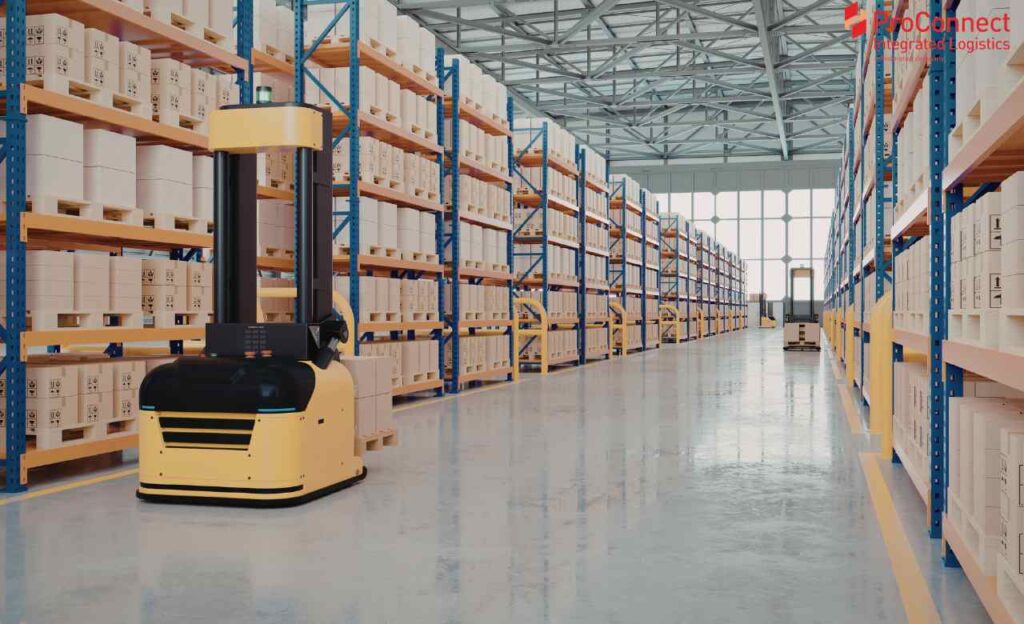
What Is Warehousing?
Warehousing provides controlled storage for products until they are needed, which is why reliable warehousing services are critical for inventory accuracy and protection. A well-managed facility keeps goods safe, easy to locate and ready for picking. It also supports inventory accuracy and protects items that require temperature control or specialised handling.
What Is Distribution?
Distribution covers the steps that move products out of storage and toward their destination, making efficient distribution operations essential for on-time delivery. It includes picking, packing, dispatching and route planning. The aim is simple: deliver orders accurately and on time.
Warehousing vs Distribution: Key Differences and Overlaps
| Aspect | Warehousing | Distribution |
|---|---|---|
| Purpose | Storing products safely and maintaining accurate inventory levels | Moving products to retailers, wholesalers or customers |
| Speed | Slower, focused on stability and organisation | Faster, focused on order fulfilment and timely delivery |
| Value-added services | Limited activities such as basic sorting or repacking | More active services including picking, packing, labelling and cross-docking |
| Inventory behaviour | Holds deeper stock for longer periods | Handles quick flow-through with shorter storage times |
Why Warehousing and Distribution Matter in the Supply Chain
Warehousing and distribution shape how smoothly a business operates. When both functions are well managed, stock remains accurate, orders move faster and everyday decisions become easier. They also give companies the flexibility to respond to demand changes without disrupting service levels. This is why most supply chain improvements begin with strengthening storage and delivery operations.
Cost and Space Optimisation
A well-organised warehouse reduces unnecessary handling, prevents product damage and makes better use of available space. Clear storage systems, efficient slotting and steady receiving routines help businesses avoid renting additional space or paying for urgent, last-minute shipments.
Better Customer Experience and Reliability
Customers rely on accurate, timely deliveries. Warehousing supports this by keeping products protected and easy to locate, while distribution ensures that orders leave on time and reach customers accurately, especially during last-mile delivery. Retailers and wholesalers benefit from consistent stock availability, and e-commerce brands gain repeat business through dependable fulfilment.
Compliance, Safety and Quality Control
Warehousing provides the structure needed to handle products safely and meet regulatory requirements. This includes appropriate storage conditions, secure racking, quality checks and careful handling for sensitive goods. Distribution maintains this standard by ensuring items remain protected in transit and that labelling and documentation are correct.
Strategic Location Advantages with UAE and Dubai Relevance
The UAE gives businesses a strong geographic advantage by sitting at the crossroads of major global trade routes. This positioning supports fast movement of goods and makes regional distribution more predictable. Three advantages stand out clearly.
Access to GCC, Africa and India: The UAE’s position allows quick reach to nearby regions, making regional distribution faster and more reliable.
JAFZA, DWC and Bonded Storage Options: Dubai’s logistics zones offer bonded and non-bonded facilities that support smooth customs processes and flexible storage.
Ideal for Re-export and Regional Distribution: Its central location makes the UAE an efficient base for re-export operations and multi-country distribution.
Core Functions of Warehousing and Distribution
Warehousing and distribution rely on a set of core activities that keep products organised and ready to move. Strong performance in these areas helps businesses maintain accuracy, shorten lead times and reduce unnecessary handling.
Receiving and Inbound Processing
This stage checks incoming goods, confirms quantities and updates inventory records. Clear receiving routines prevent errors from entering the system and set the foundation for accurate stock control.
Storage, Put-Away and Slotting
Once received, products are stored in designated locations where they are easy to access. Good slotting keeps fast-moving items closer to picking areas, reducing walking time and improving overall efficiency.
Order Picking, Packing and Dispatch
These steps prepare products for delivery. Accurate picking and careful packing ensure orders are correct, while organised dispatch helps shipments leave on time and reach their destination without delay.
Transportation Planning and Delivery Management
This function coordinates how goods move out of the warehouse. Route planning, carrier coordination and timely dispatch all contribute to predictable deliveries and lower transportation costs.
Distribution Center vs Warehouse: What’s the Difference?
Warehouses and distribution centers support supply chains in different ways. A warehouse focuses on storing goods safely, while a distribution center focuses on processing and moving them quickly. The simple comparison below shows how each one functions in practice.
| Aspect | Warehouse | Distribution Center |
|---|---|---|
| Main role | Stores products for short or long periods | Handles fast movement of goods with a focus on order fulfilment |
| Speed of operations | Steady and storage-centred | Rapid, high-throughput environments |
| Key activities | Receiving, storing, stock control | Picking, packing, labelling, cross-docking |
| Inventory behaviour | Holds deeper stock levels | Manages quick flow-through with minimal storage |
| When it’s needed | Ideal for maintaining safety stock and bulk inventory | Ideal for fast delivery, e-commerce fulfilment and regional distribution |
Warehousing and Distribution in the UAE
The UAE has become one of the most efficient logistics hubs in the region, making it an ideal base for businesses that move goods across multiple markets. Its location, infrastructure and trade-friendly environment create a strong foundation for warehousing and distribution operations. The combination of Jebel Ali Port and Al Maktoum International Airport gives Dubai one of the region’s most efficient multimodal logistics networks.
Bonded and Non-Bonded Storage Advantages
Bonded facilities allow companies to store imported goods without paying duties until they are sold or re-exported. Non-bonded storage supports everyday inventory needs. Together, these options give businesses flexibility in how they manage stock and cash flow.
Regional Distribution Across GCC, Africa and Asia
The UAE’s position makes it easy to distribute goods to close markets such as Saudi Arabia, Oman, Kuwait, East Africa and the Indian subcontinent. Shorter transit times help companies maintain steady delivery schedules across multiple regions.
Customs Efficiency and Trade Facilitation
The UAE is known for fast customs clearance, digital documentation and predictable procedures. These advantages reduce delays, support re-export activity and help businesses maintain smooth supply chain operations.
Common Warehousing and Distribution Challenges
Even well-run operations face obstacles that affect accuracy, cost and delivery performance. Addressing these challenges early helps businesses maintain smooth and predictable supply chain flow.
Inventory Inaccuracy
Incorrect stock levels disrupt almost every part of the operation. Inaccurate counts lead to missed orders, unnecessary reordering and wasted time during picking. Consistent checks and real-time tracking help keep inventory reliable and prevent costly errors.
Slow Picking Processes
Inefficient picking slows the entire fulfilment cycle. Common causes include long travel paths, unclear storage locations or poor slotting. When picking is slow, dispatch delays follow, directly affecting delivery promises and customer satisfaction.
Rising Storage and Transportation Costs
Space costs, fuel expenses and labour pressures can increase quickly. Without efficient layouts, clear workflows and smart route planning, these costs add up. Improving storage use and consolidating shipments helps control expenses while keeping service levels steady.
Strategies to Optimise Warehousing and Distribution
Improving warehouse and distribution performance starts with practical changes that make daily work faster, more accurate and easier to manage. The strategies below help reduce errors, shorten lead times and keep costs predictable.
Implementing a Modern Warehouse Management System (WMS)
Implementing a warehouse management system improves stock visibility, order accuracy and daily operational control. It reduces manual work, prevents counting errors and helps teams manage higher volumes without losing control of inventory.
Using ABC or XYZ Inventory Segmentation
Segmenting inventory based on demand or value helps teams prioritise what matters most. High-demand or high-value items receive prime storage locations, while slow movers can be placed further away. This improves picking speed and supports more accurate replenishment.
Cross-Docking and Flow-Through Distribution
Cross-docking moves goods directly from receiving to dispatch with minimal storage time. It is ideal for products with short lead times or high turnover, helping businesses reduce handling costs and speed up delivery.
Automation and Technology
Tools such as barcode scanning, RFID tracking and automated storage systems improve accuracy and save time. Even small steps, such as switching from manual checks to handheld scanners, help reduce errors and support smoother daily operations.
Case Study: How Optimised Warehousing Improves Performance
Small operational changes can create significant improvements in day-to-day warehouse performance. The example below shows how a typical business can benefit from basic optimisation without major investment or complex systems.
Before Optimisation
A mid-sized retailer managed inventory manually and used a layout that grew over time rather than being planned. Fast-moving products were stored far from picking areas, and stock accuracy often varied. As order volumes increased, pickers spent more time searching for items, and dispatch often ran behind schedule.
Changes Implemented
The team introduced a simple warehouse management system for stock visibility and reorganised the layout so high-demand items were placed closer to packing stations. Clear slotting rules were added, and receiving routines were tightened to reduce counting errors.
Results Achieved
The operation saw faster pick times, fewer stock discrepancies and more predictable dispatch schedules. With clearer storage rules and real-time inventory updates, the team handled higher volumes with less effort and fewer delays.
How ProConnect Supports Efficient Warehousing and Distribution
ProConnect’s warehousing and distribution capabilities are built to support businesses that need accuracy, visibility and steady supply chain performance. The focus is on practical solutions that help companies manage stock confidently and move goods across the region with fewer delays.
Bonded and Non-Bonded Storage
ProConnect offers both bonded and non-bonded storage options, allowing businesses to manage regular inventory as well as goods intended for re-export without immediate duty payments. This flexibility helps companies plan stock more efficiently and control cash flow.
Temperature-Controlled Zones
Products that require specific temperature conditions can be stored securely in dedicated climate-controlled areas. This ensures quality is maintained from the moment goods arrive until they are dispatched.
Distribution Across the UAE and GCC
With facilities positioned close to major transport routes, ProConnect supports reliable movement of goods across the UAE and neighbouring markets. This includes everyday replenishment, bulk distribution and time-sensitive deliveries.
Value-Added and Customisation Services
Services such as labelling, kitting and repacking allow businesses to prepare products for retail, adjust packaging requirements, or create custom sets without additional handling by external teams.
Frequently Asked Questions
What is warehousing and distribution in simple terms?
Warehousing is the organized storage of goods. Distribution is the process of moving those goods to retailers, wholesalers, or customers. Together, they ensure products are available and delivered on time.
What is the main purpose of a distribution centre?
A distribution center focuses on fast order processing. It picks, packs and dispatches products quickly so deliveries reach their destination without delay.
How do warehousing and distribution improve supply chain performance?
They help keep stock accurate, reduce handling time and support consistent delivery schedules. This leads to fewer errors, lower costs and better customer service.


 APP DOWNLOAD